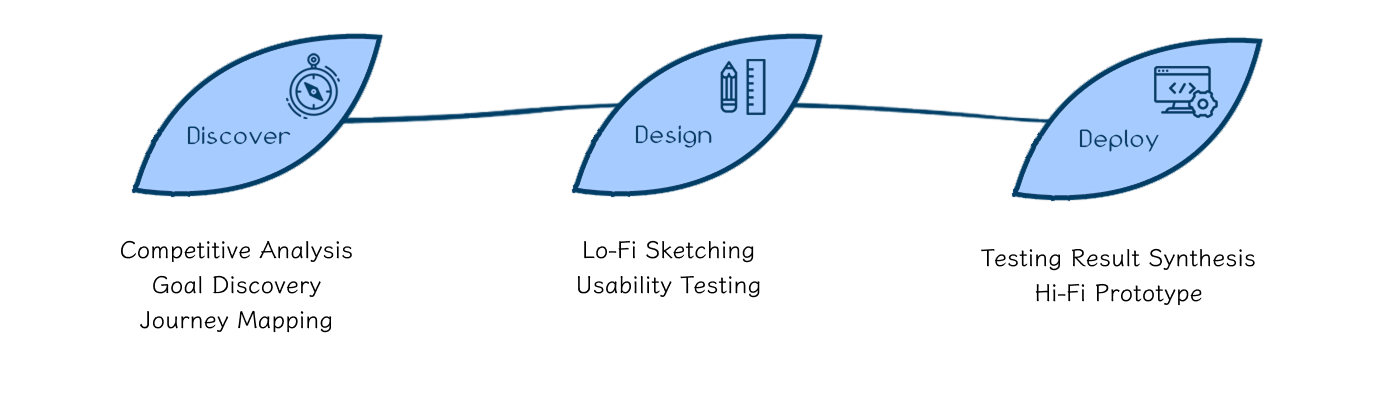
Discovery
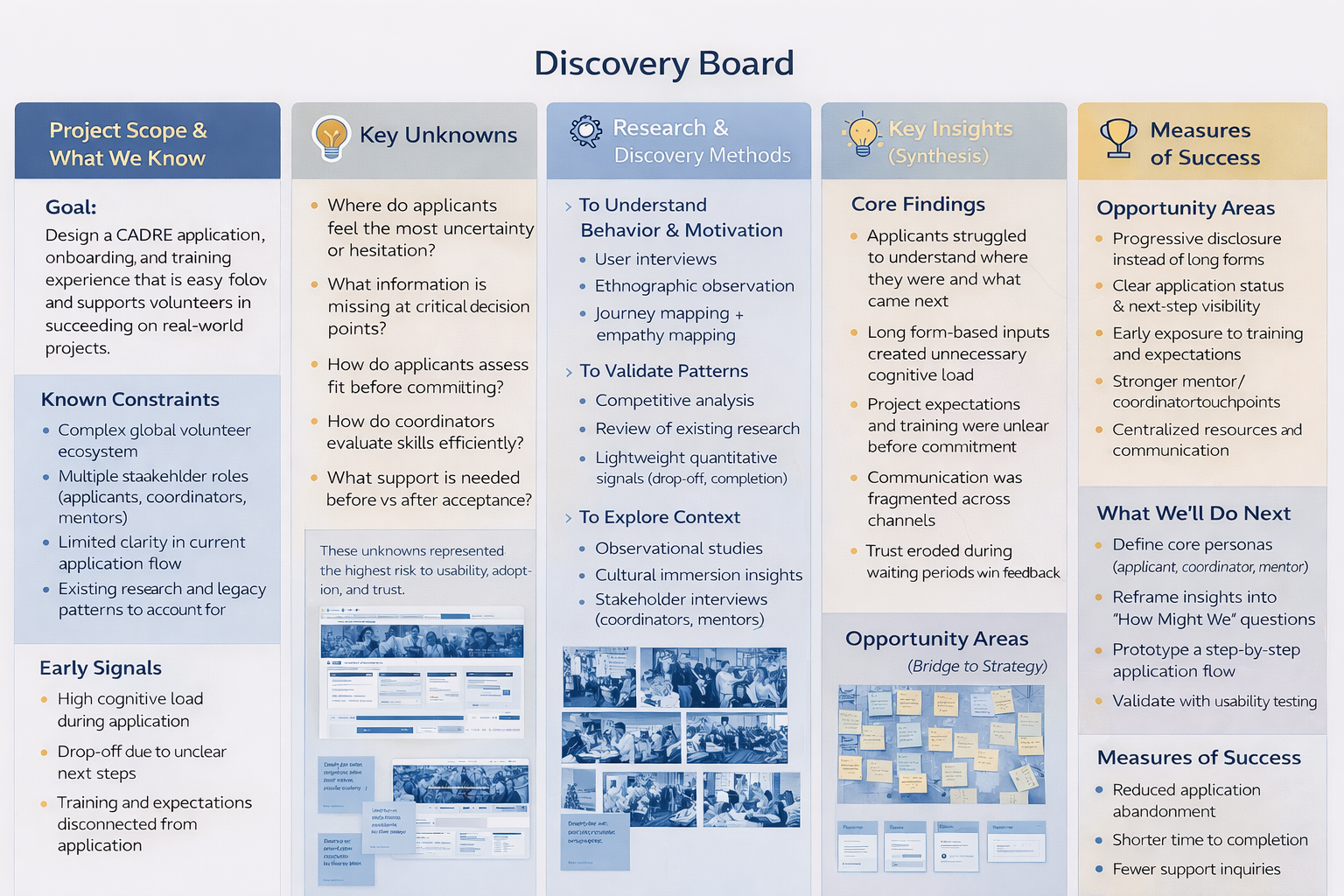
The project began with a focused discovery sprint to reassess the existing CADRE application experience and uncover critical pain points across the applicant journey. We synthesized prior research and conducted qualitative interviews, journey mapping, and empathy mapping to understand not just where users struggled, but why those moments created friction or uncertainty.
Ethnographic Studies
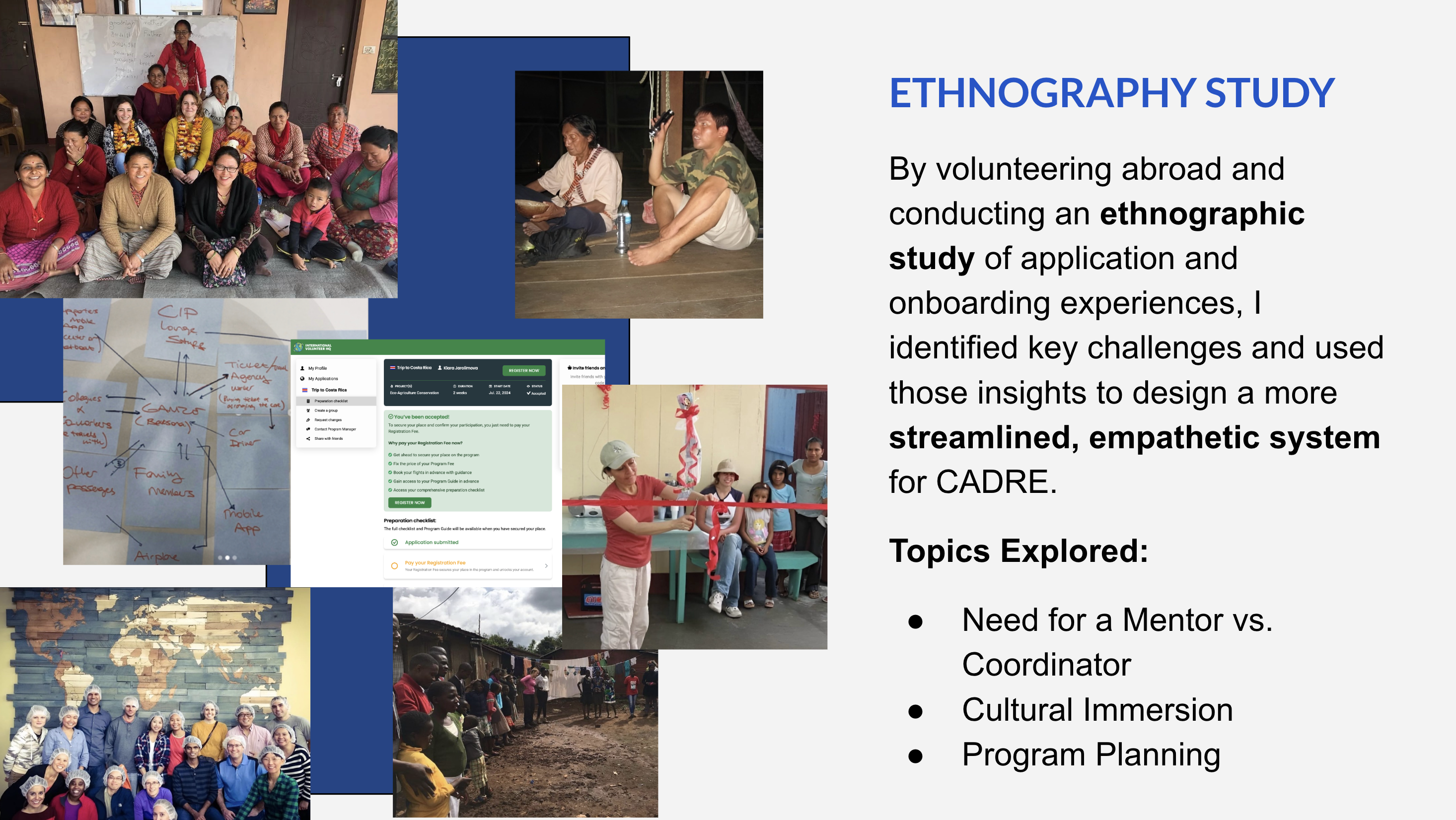
To deepen our understanding, I conducted ethnographic studies through on-the-ground volunteering and observation, allowing me to experience the application and onboarding process within real cultural and environmental contexts. This revealed how applicants navigated ambiguity, expectations, and communication gaps—insights that would not have surfaced through surveys alone.
Ecosystem Mapping
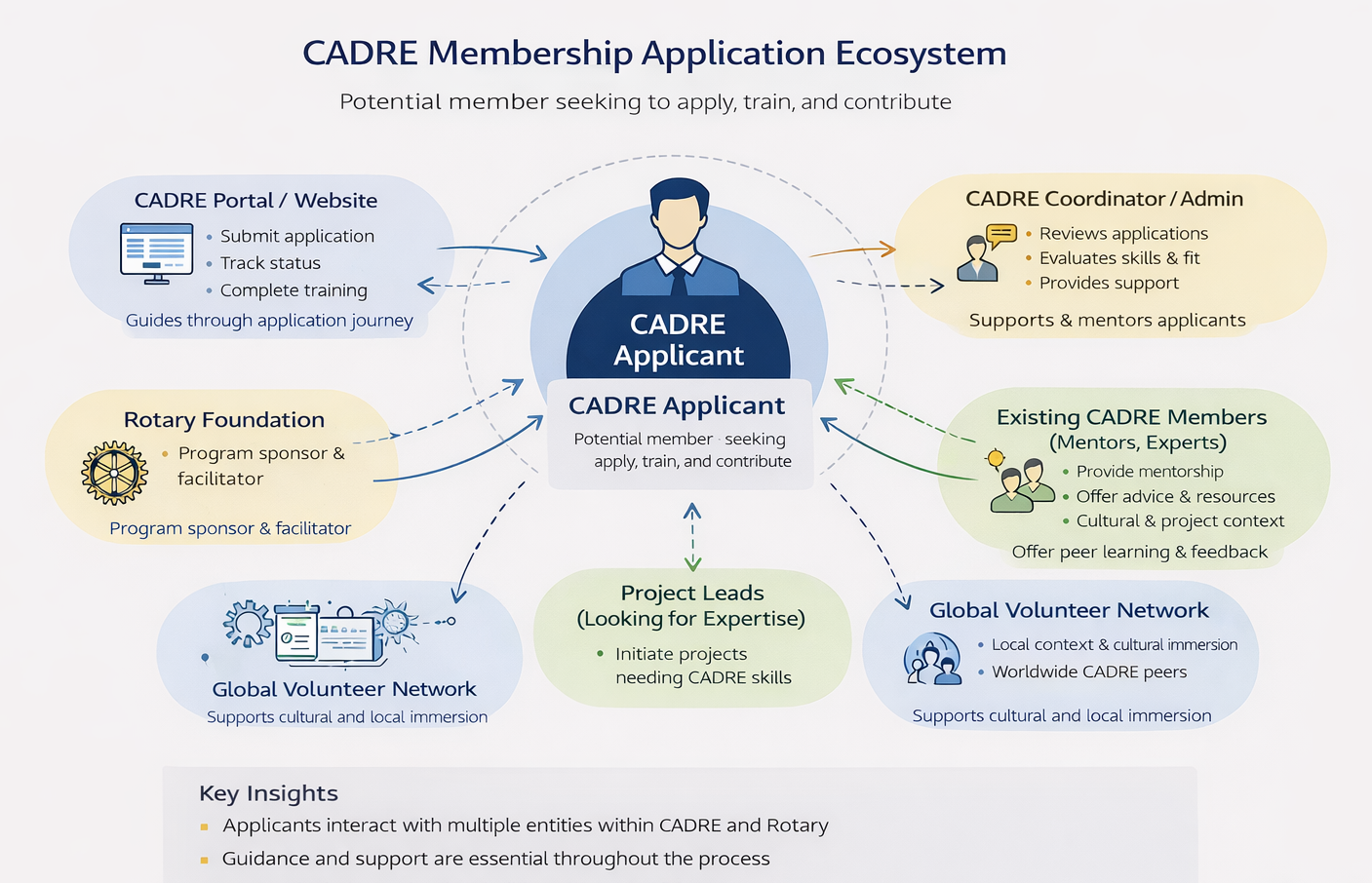
In parallel, I led ecosystem mapping to clarify the broader system surrounding CADRE applicants, including coordinators, mentors, partner organizations, and training resources. This helped identify breakdowns between roles, responsibilities, and information flow that directly impacted applicant confidence and decision-making.
Journey Mapping
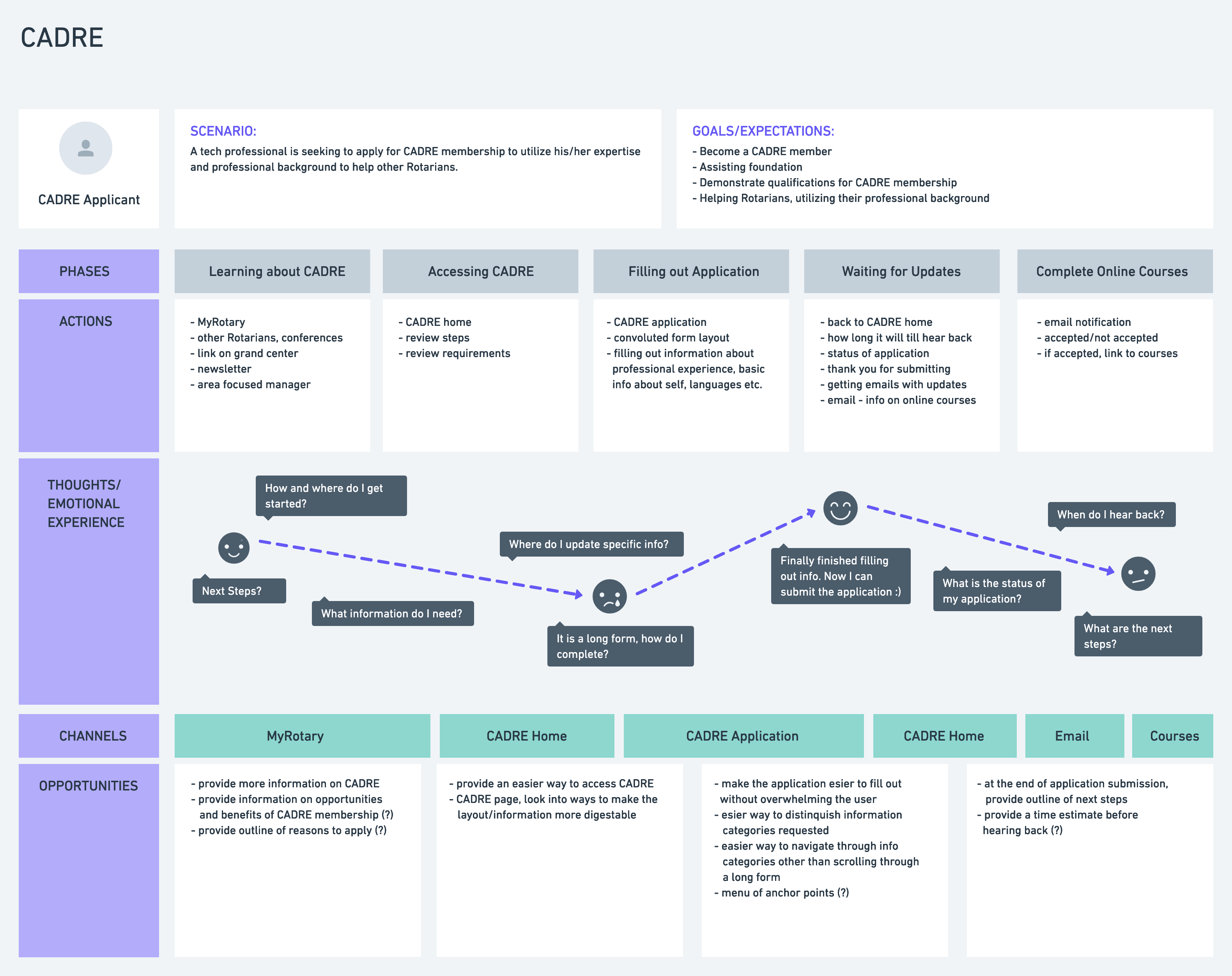
Journey mapping revealed key pain points across the CADRE application process, including overwhelming forms, unclear next steps, and anxiety caused by limited status updates. Mapping user actions and emotions exposed where the experience felt fragmented and informed solutions that streamlined the flow, clarified communication, and improved applicant confidence.
Personas and Pain Points
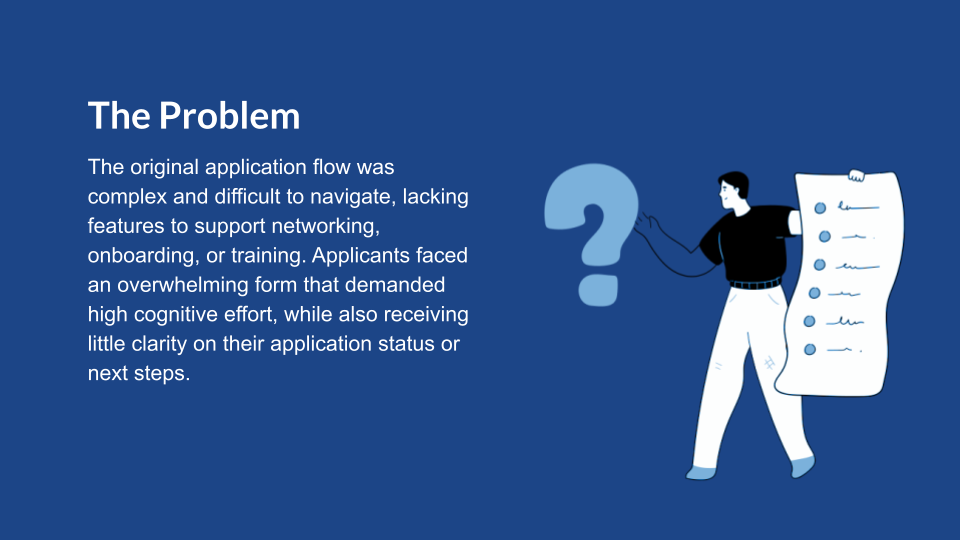
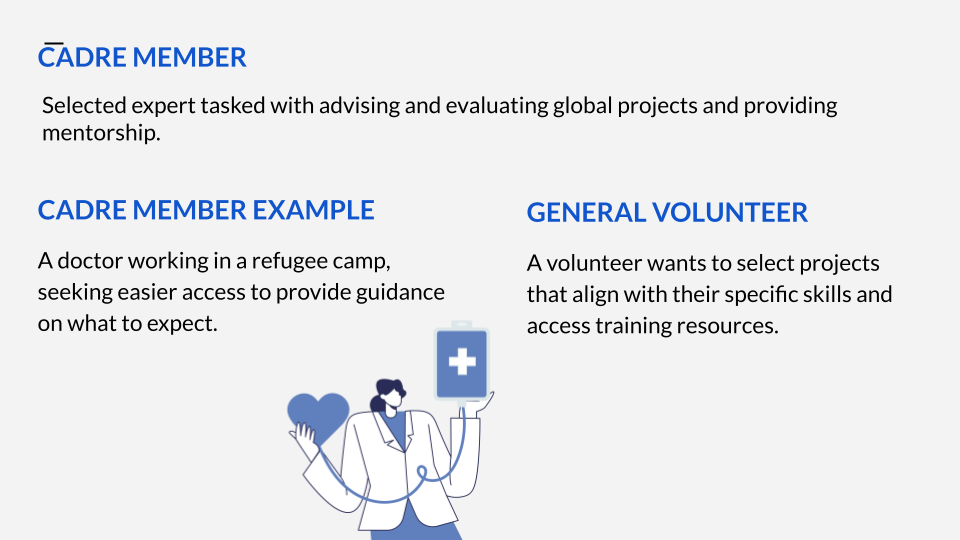
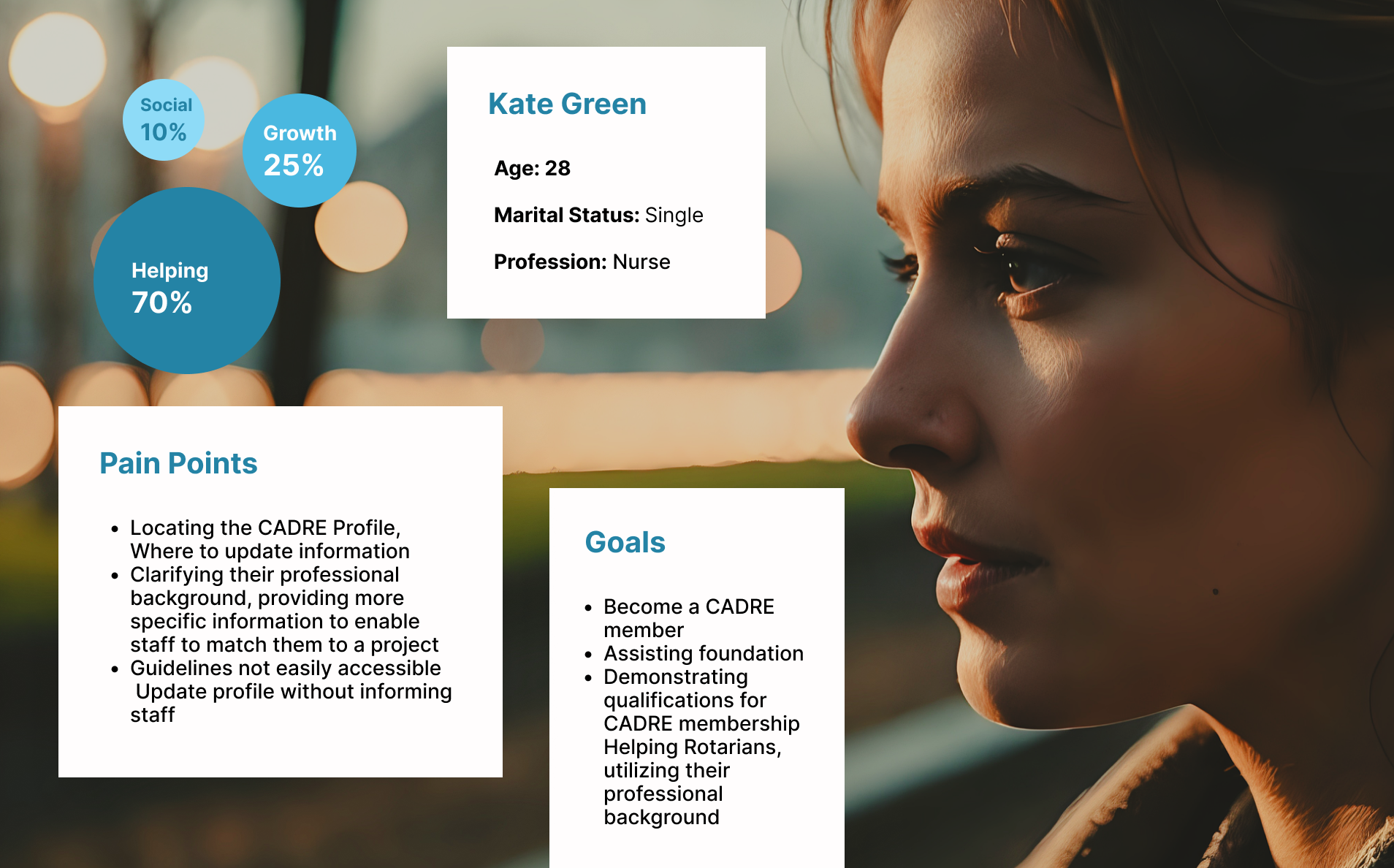
From interview insights and synthesis, we found common pain points and defined major personas representing applicants and internal stakeholders. These personas rooted design decisions in real behaviors, motivations, and constraints. Of the many valuable insights, one was the fact that applicants often felt unsure about next steps, application status, and role expectations. The application flow required a high cognitive overhead even though it provided limited feedback, which led to confusion, drop-off, and low trust.
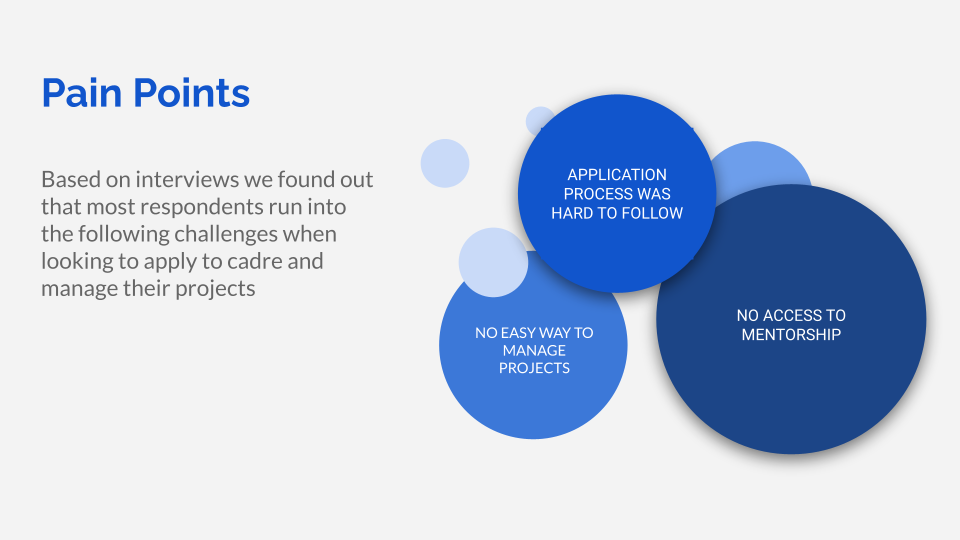
These insights culminated in a clearly articulated problem statement that aligned stakeholders around a shared understanding of the challenge and set a strong foundation for iterative, empathetic design.
Brainstorming Solutions
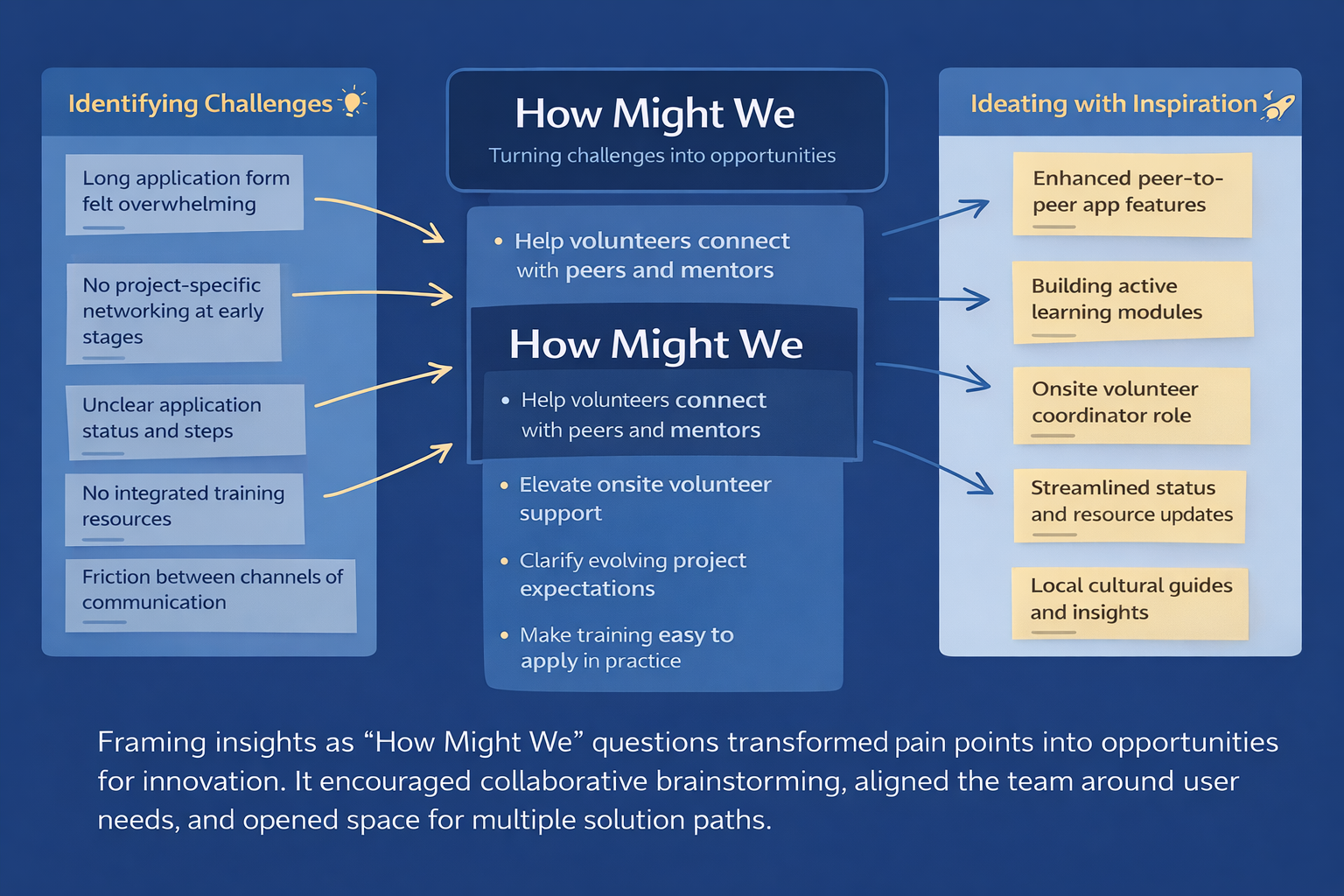
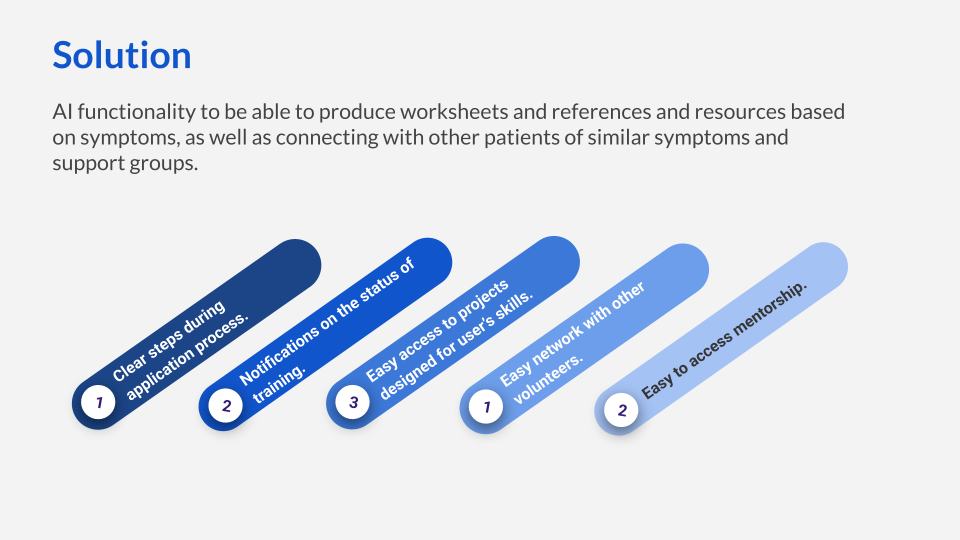
We facilitated a How Might We (HMW) exercise to reframe key challenges into actionable design opportunities. These HMWs were converted into user stories and solution concepts, helping the team align on priorities and explore scalable, constraint-aware solutions.
Experience Flow
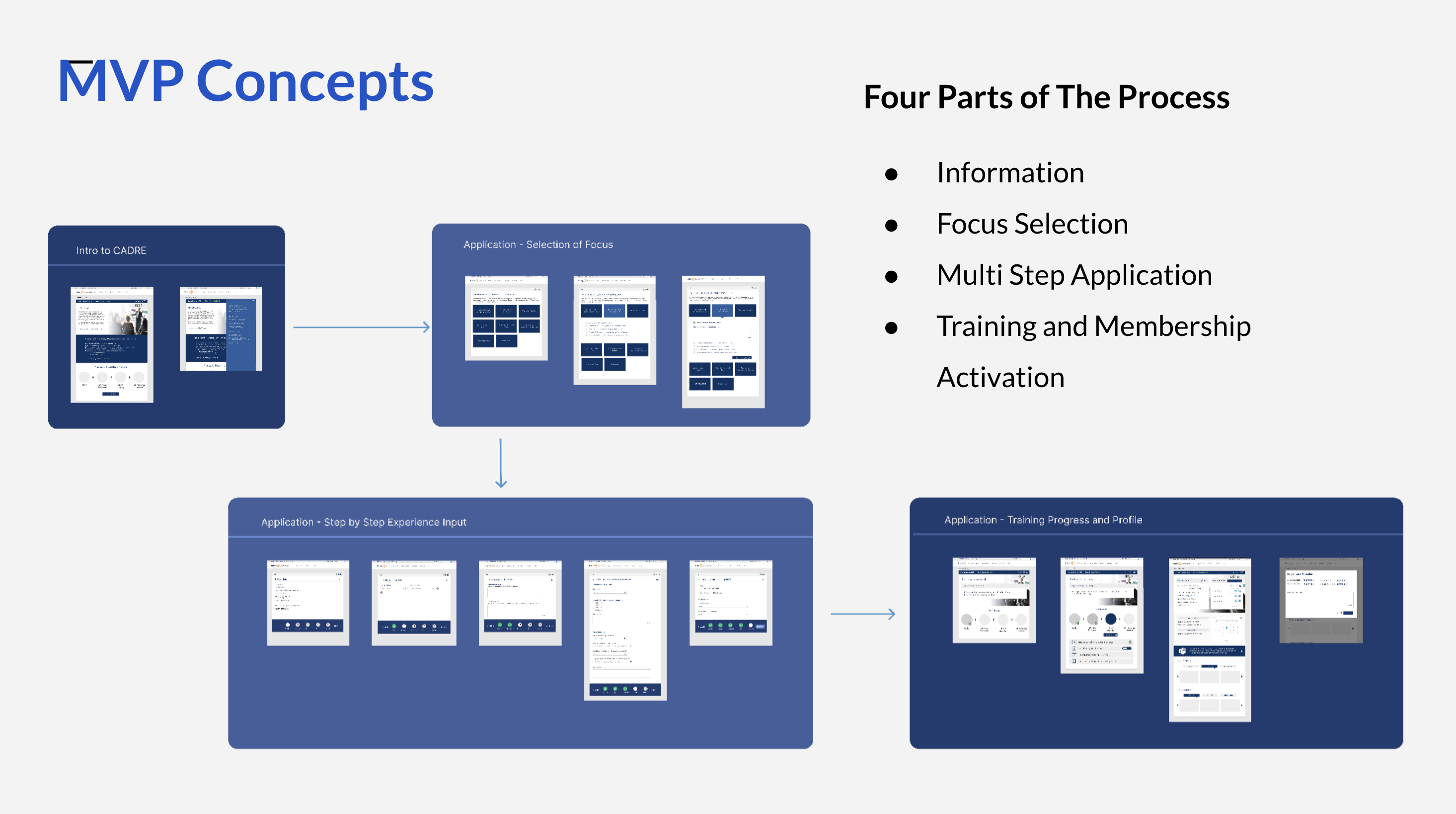
The end-to-end flow was designed to reduce cognitive load and uncertainty by guiding volunteers through a clear, step-by-step application experience. The process begins with an invitation to apply, followed by a structured focus selection and progressive disclosure of experience inputs—allowing applicants to move forward without feeling overwhelmed by long, open-ended forms.
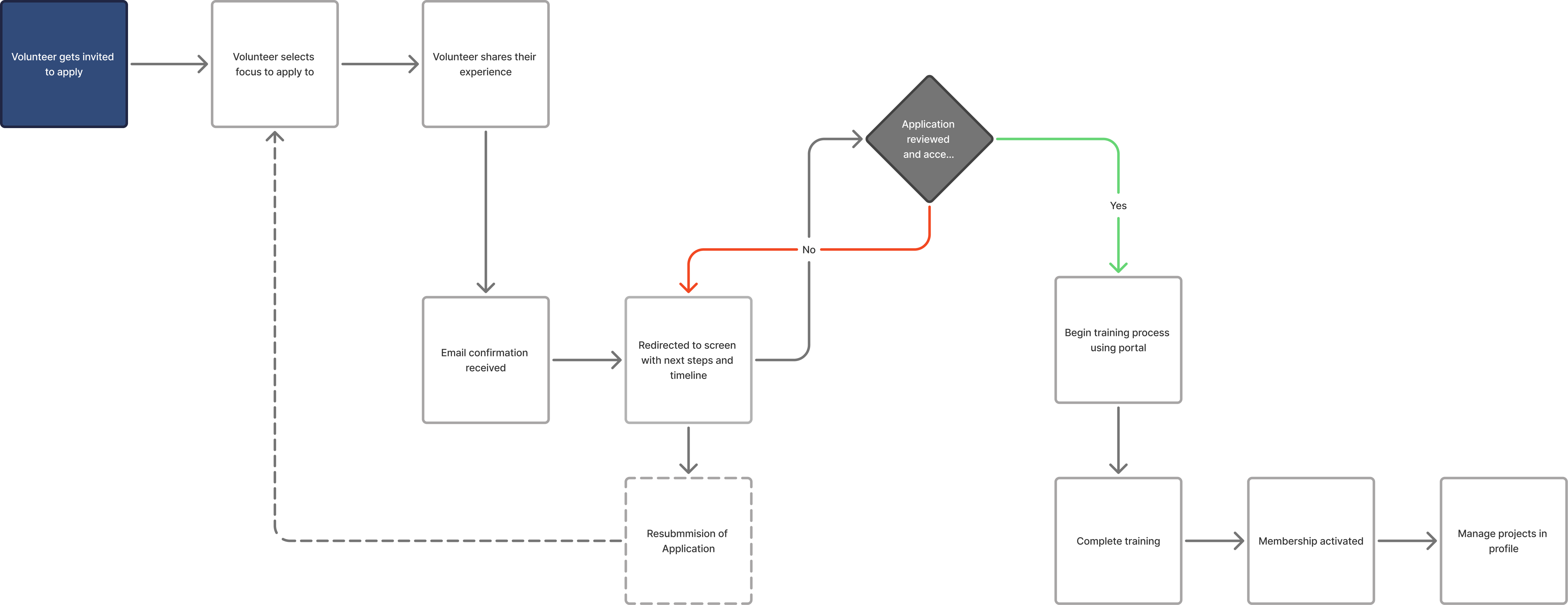
High Fidelity Flow
At the high-fidelity level, the user interface emphasized clarity, orientation, and access to resources. Navigation and layout reinforced where users were in the process, what was required next, and how their input contributed to the overall application. Training progress, onboarding materials, and profile management were integrated into the same experience to create continuity from application through activation. By addressing common pain points—unclear status, overwhelming forms, and scattered resources—the final experience made the application easier to follow, reduced cognitive effort, and increased user confidence throughout the journey.
High Fidelity Design
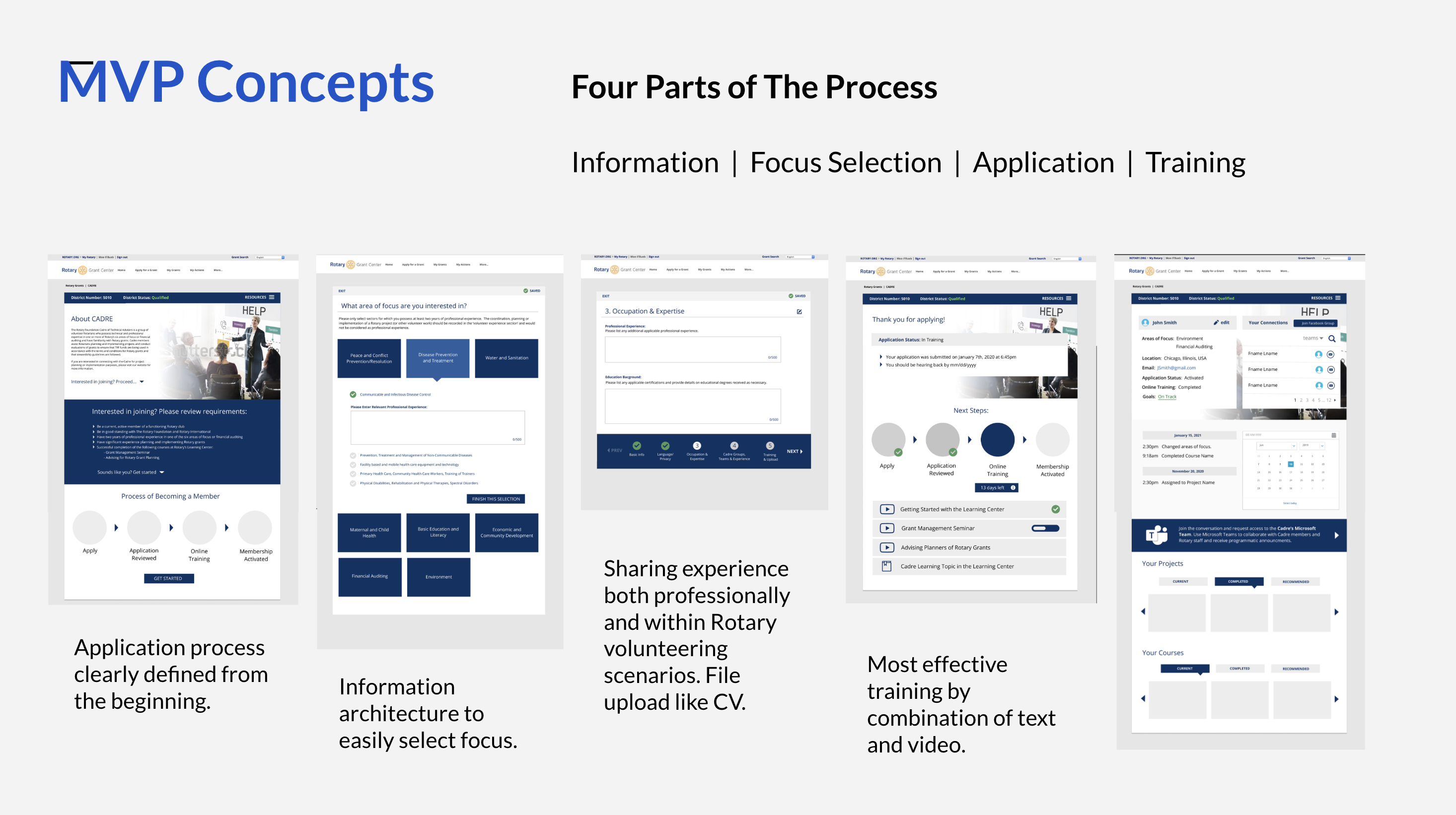
Our high-fidelity design translated research and validated flows into a clear, production-ready experience structured across four stages—Information, Focus Selection, Application, and Training—so volunteers always knew where they stood and what to do next. Via a straightforward information architecture, clear visual hierarchy, and step-by-step application flows, the interface reduced cognitive load. Incorporated feedback, progress indicators, and onboarding content were instrumental in facilitating the confidence and continuity provided from first interaction through active participation, all at the same time ensuring that an effective MVP achieved this usability, scalability, and accessibility.
Reducing Cognitive Load Through Progressive Selection
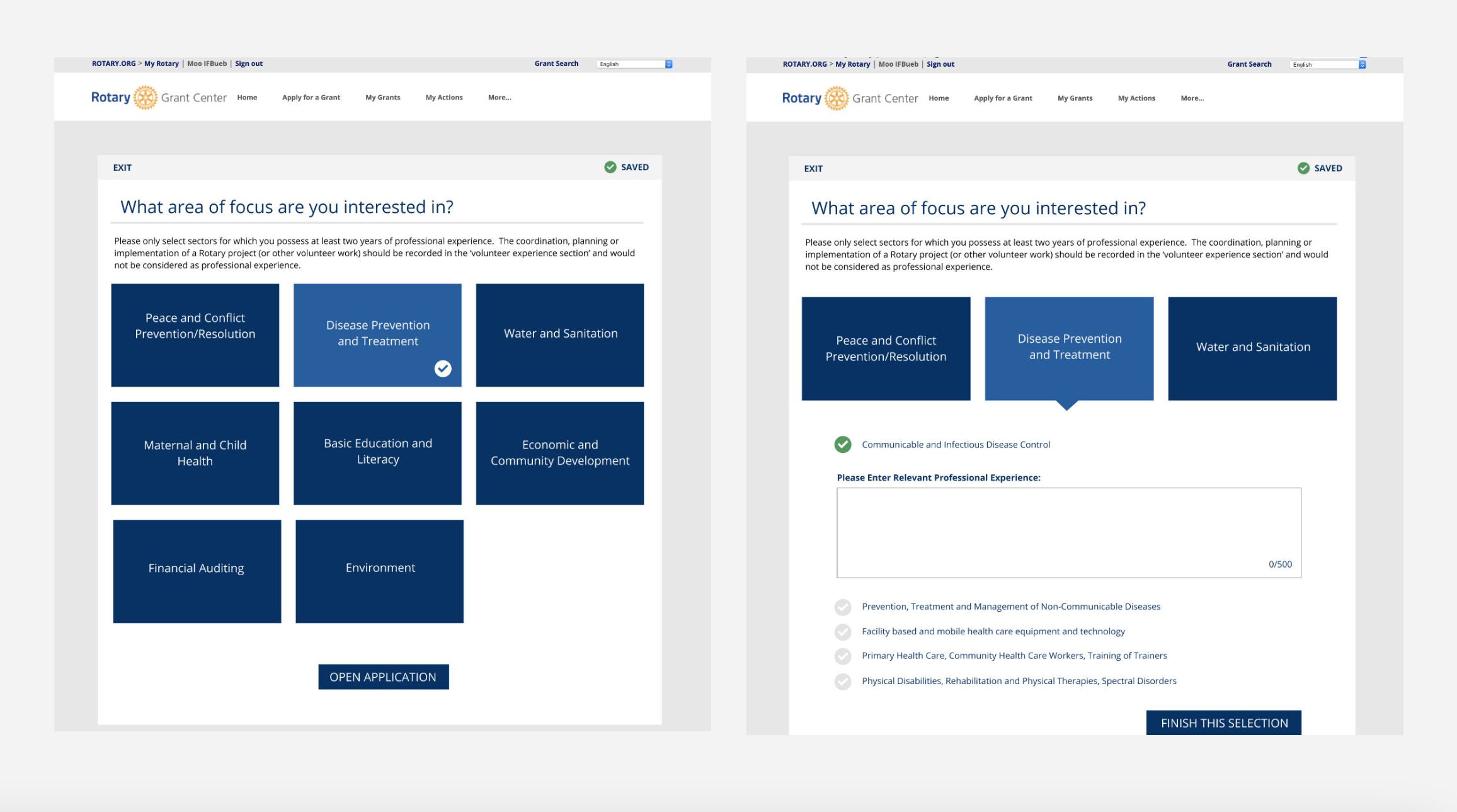
An initial experience was based on lengthy form-based construction, which imposed significant cognitive load and was very difficult to use. The design split project selection and skill sharing into well-organized, sequential actions, allowing users to make one decision at a time. Visual selection tiles took over the dense text fields, while progressive disclosure, inline validation, and clear completion states simplified mental work, clarified requirements, and changed an intimidating form into an intuitive, confidence-boosting flow.
Usability Testing
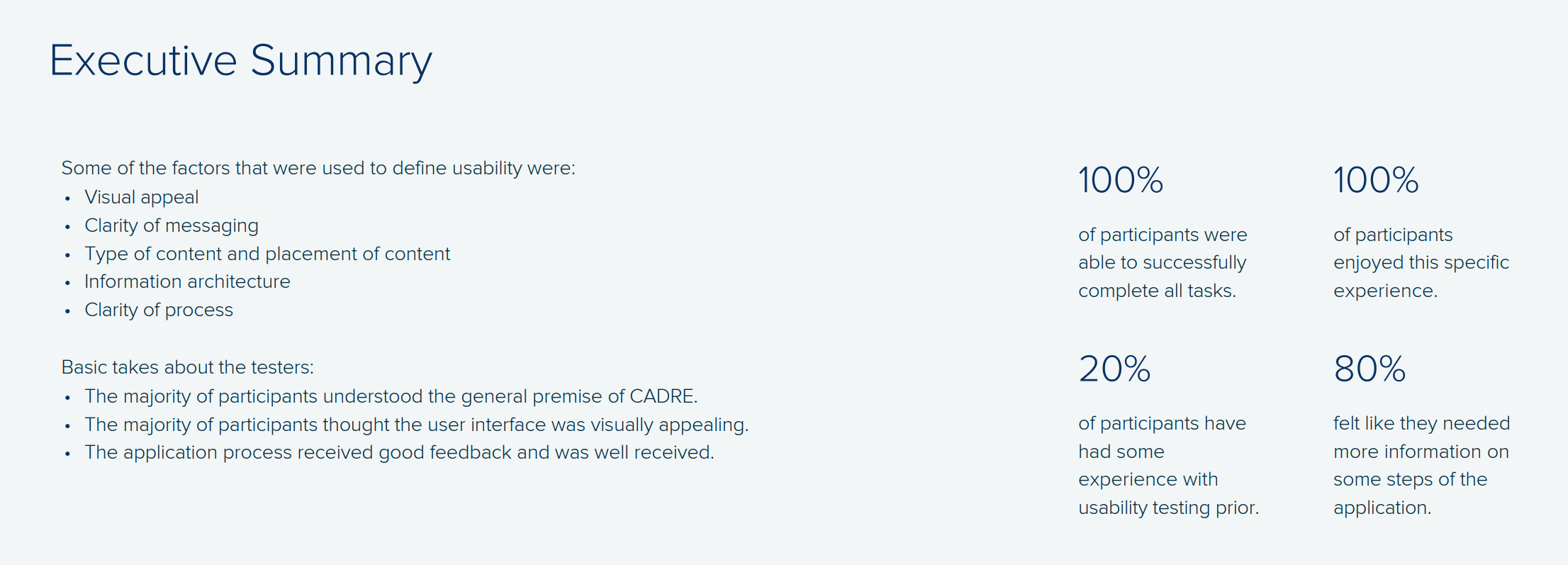
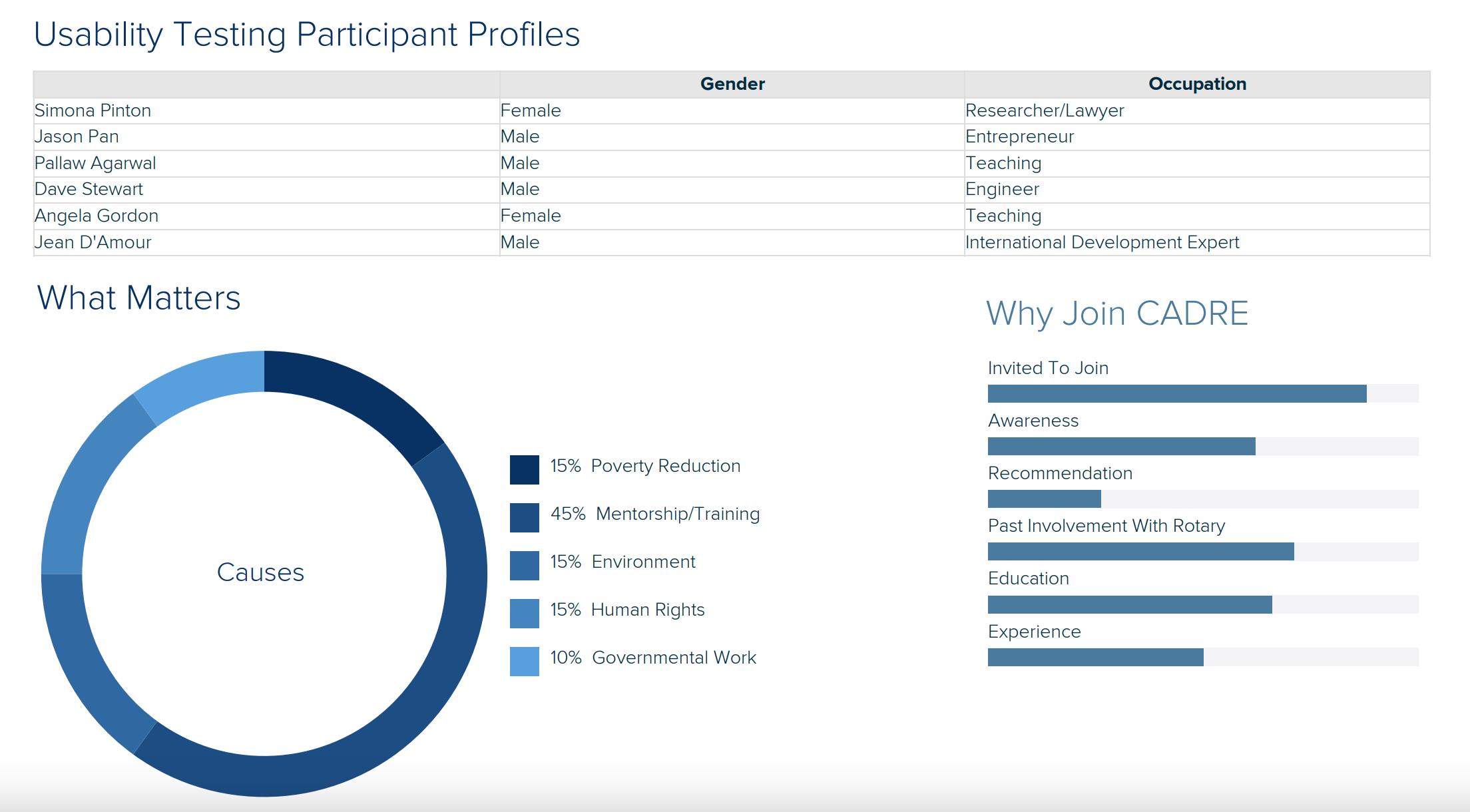
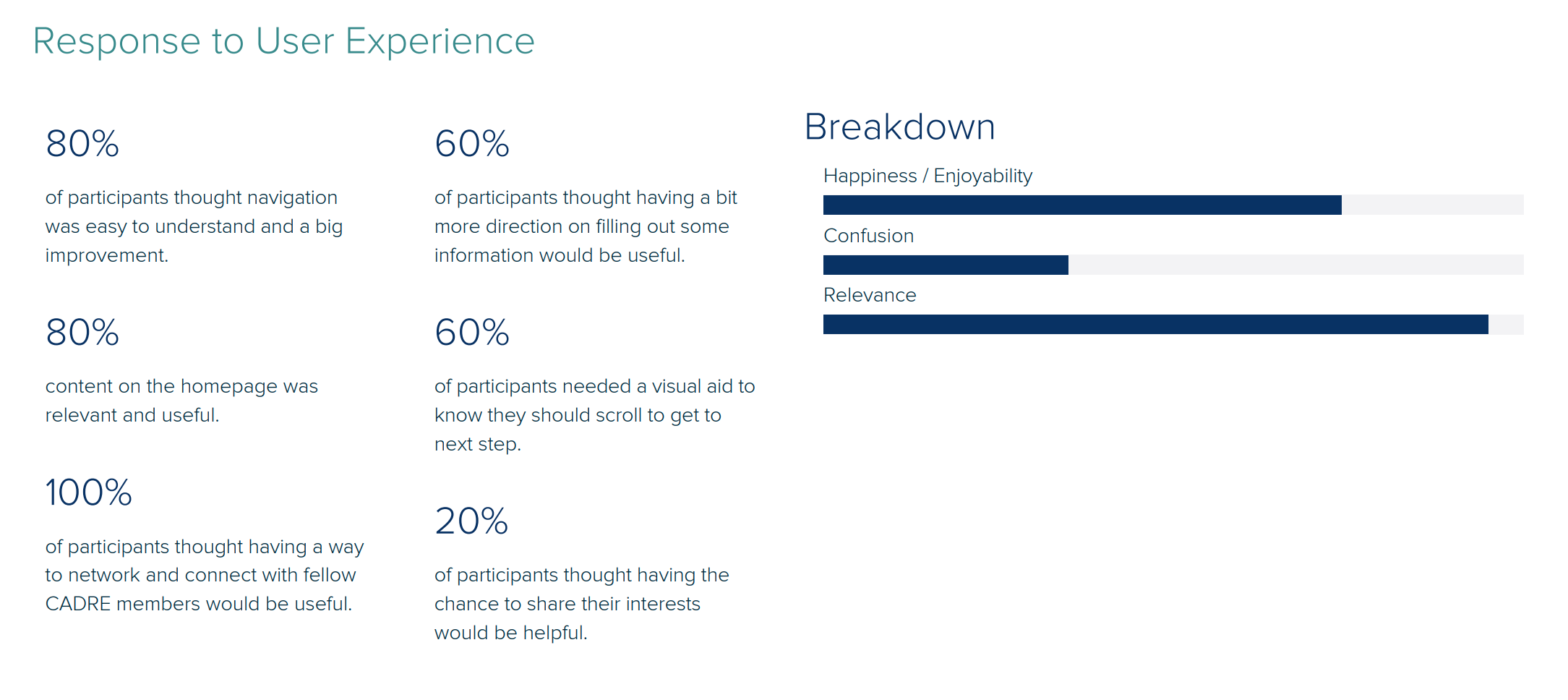
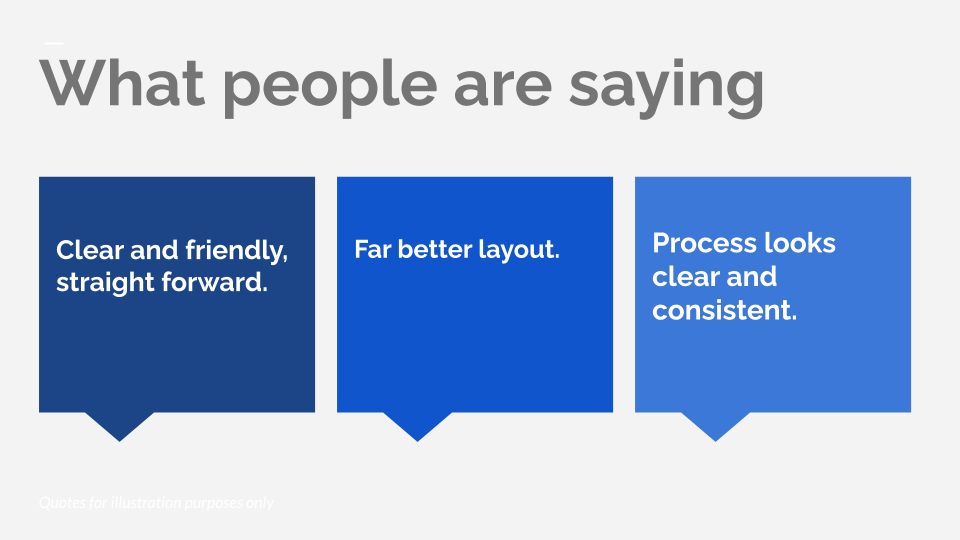
Usability tests were performed with existing CADRE members and potential volunteers to gather first-time and seasoned insights. Testing showed how clarity, guidance, and feedback influenced confidence and task completion, which validated the improvement and also highlighted areas in which a clearer, concise direction should be implemented. Lessons learned and insights distilled helped inform refinements to the information hierarchy, visual cues, and mentorship touchpoints to support volunteers at different stages. This report presents insights gained using several user scenarios and moderated testing.
Proof of Concept: Member Portal Experience
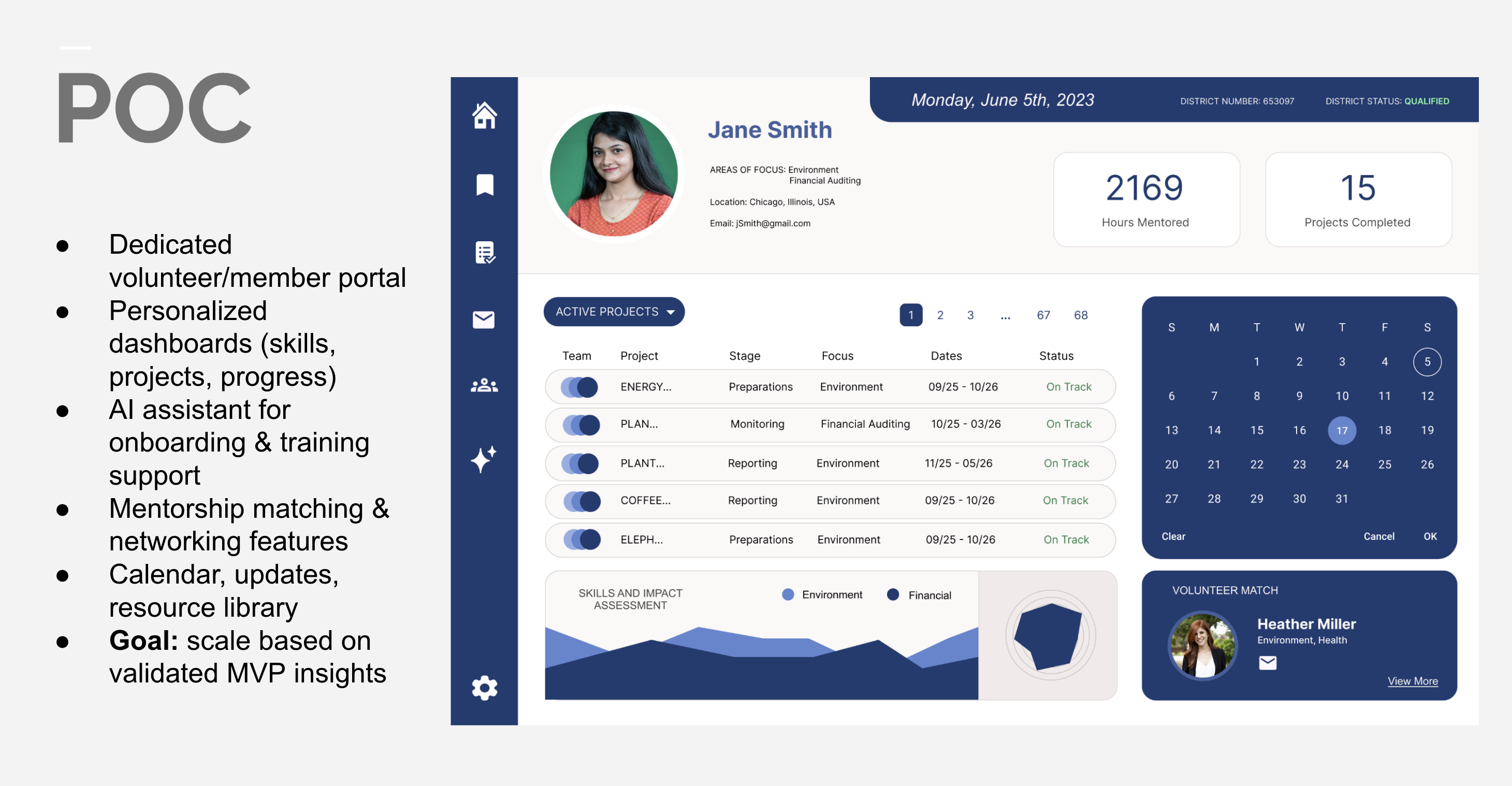
This proof of concept was informed by additional usability testing of high-fidelity prototypes, which revealed that once applicants moved beyond acceptance, their primary needs shifted from application clarity to ongoing visibility, mentorship access, and impact tracking. The POC explores how a dedicated member portal could support CADRE members throughout active project engagement.
Key Impact Areas
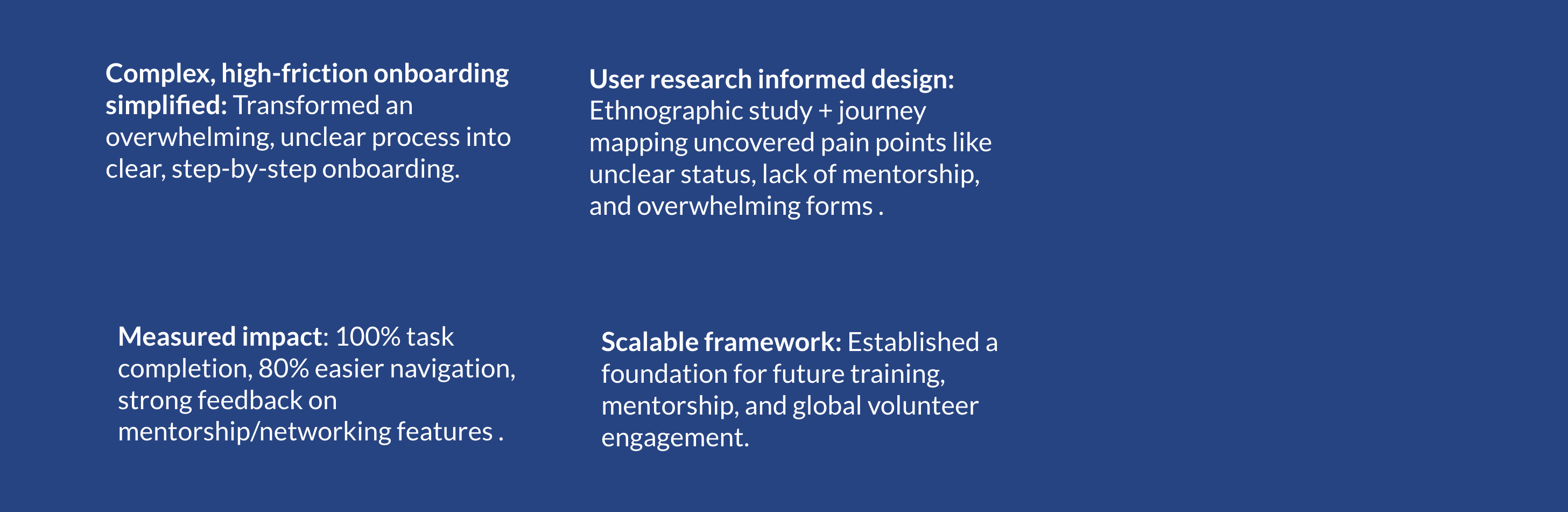
This work turns a complicated, high-friction onboarding into a clear route step by step based on real user requirements. Through ethnographic research and journey mapping we identified critical pain points—including unclear application status, limited access to mentorship, and overwhelming forms—all of which helped shape design choices. The changes produced measurable results, such as 100% task completion, considerably easier navigation for most users, and robust validation of mentorship services and networking features. In addition to tangible usability gains, the solution laid out a scalable foundation to expand future training, mentorship, and global volunteer engagement as the CADRE program grows.
Key Takeaways
“Klara brings not only her professional expertise to her work but her own personal passion. Klara is a great advocate for her users and a valuable addition to any team or project. I would be excited to work with Klara again in the future!” ~ Mhari Goldstein
-
Early mentorship access increases confidence and follow-through.
-
Usability testing drives meaningful gains in engagement and clarity.
-
Skill transparency improves project matching and volunteer impact.